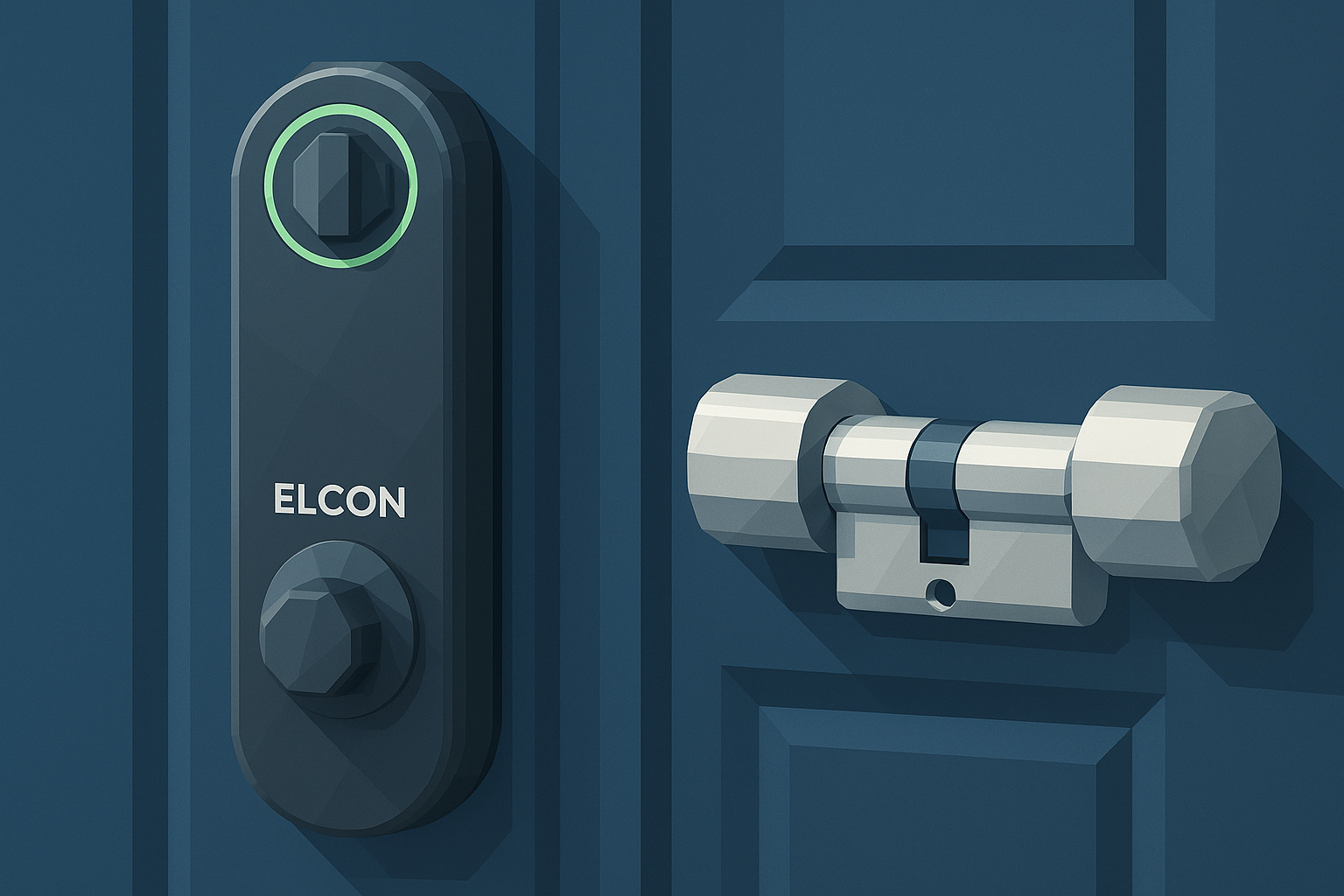
The way we secure and open our front doors is fundamentally changing due to modern technology. Traditional keys are increasingly being replaced by electronic systems such as digital locking cylinders and Smart Locks. Both offer more convenience and flexibility, but differ in their functionality and application.
Modern locking systems allow flexible access management, remote control, and eliminate worries about lost keys. But which system is right for you: a digital locking cylinder or a Smart Lock?
In this article, we show you the most important differences, advantages, and disadvantages of both solutions. This will help you find out which smart door opening system best suits your daily life and security requirements.
What is a digital locking cylinder?
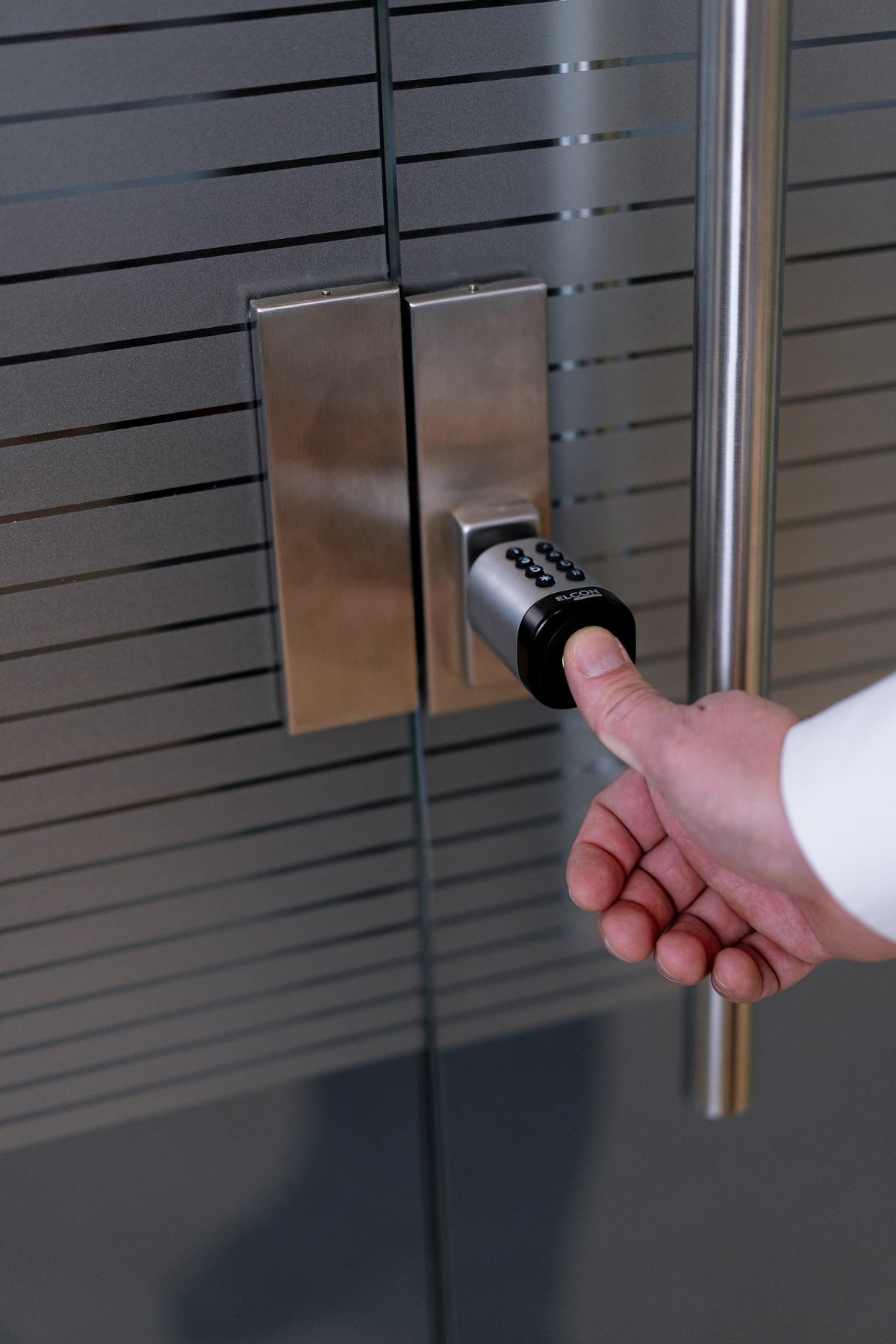
A digital locking cylinder replaces the traditional, mechanical cylinder in your door lock with an electronic component. This means that instead of turning a classic key, you open and close the door using electronic signals – usually by entering a PIN code, a transponder (e.g., a chip card), or a radio signal. Nevertheless, the door is usually opened manually afterwards using the handle, similar to a normal lock.
Digital locking cylinders particularly stand out for their simple installation: You simply swap the existing cylinder for the digital one, without having to make major modifications to the door. This makes them attractive for both tenants and owners who want to upgrade their apartment or house door quickly and with little effort.
These systems are very robust and offer a long battery life; often one to two years pass before a battery change is necessary. Through the hardware, you can manage different users by assigning individual PIN codes, transponders, or key fobs. Some models also allow codes to be time-limited – for example, for tradespeople or cleaning staff.
Overall, digital locking cylinders are a practical and reliable solution if you are looking for simple, secure, and keyless access without much fuss.
An overview of our digital locking cylinders can be found here.
What is a Smart Lock?
A Smart Lock is an electronic extension that equips your existing door lock with motorized control. Unlike the digital locking cylinder, it does not replace the cylinder itself but usually sits on the inside of the door and handles locking and unlocking via a motor.
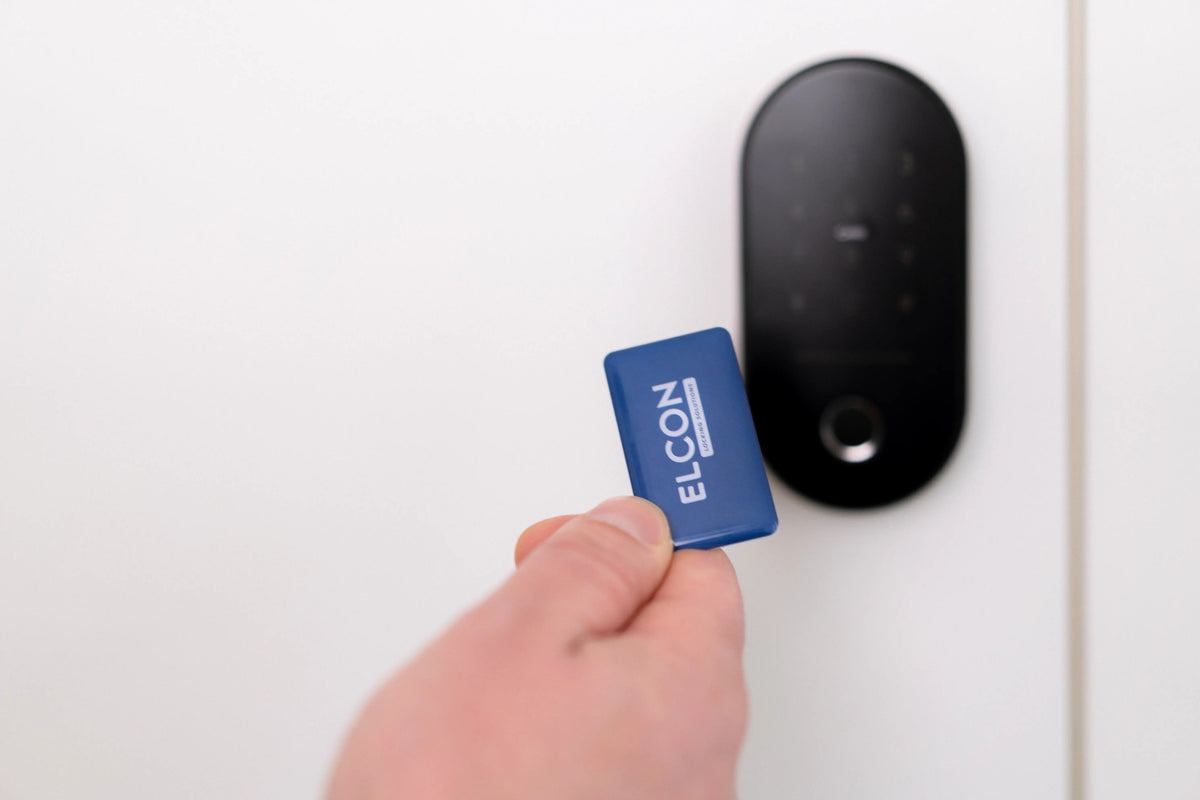
Control is primarily done via your smartphone, usually through a dedicated app. You can conveniently open, close, or lock the door with it – often even automatically when your smartphone approaches the door ("Auto-Unlock"). Access is also possible via PIN, fingerprint sensor, or sometimes even voice control.
Smart Locks thus offer maximum convenience and flexibility: You no longer need to retrieve a key and can open the door remotely, for example, for friends, delivery personnel, or tradespeople. Access rights can be managed digitally and changed or revoked directly if necessary.
Another advantage: Smart Locks often integrate into the Smart Home. They can be networked with alarm systems, surveillance cameras, or lighting systems, so that, for example, when the door is opened, the light automatically turns on or the alarm system is disarmed.
Power supply is usually via batteries, which last several months to years depending on usage. Emergency mechanisms such as a key, code, or emergency power supply are also present in good models.
Overall, Smart Locks are ideal for anyone who values high comfort, smart control, and modern networking.
An overview of our Smart Locks can be found here.
Direct Comparison: Digital Locking Cylinder vs. Smart Lock
Installation & Fitting
The digital locking cylinder replaces the existing mechanical cylinder and sits within the door lock. For this, the old cylinder must be removed. The Smart Lock, on the other hand, is attached to the inside of the door, usually without significant intervention in the door structure. The existing cylinder remains.
Operation
With digital locking cylinders, you usually open the door manually with the handle after electronic release. Smart Locks, on the other hand, open and close the door automatically via a motor drive, controlled by a smartphone app, fingerprint, or other smart input options.
Networking & Control
Digital locking cylinders usually operate autonomously and are rarely connected to the internet. Smart Locks, however, are often online, offer remote control via app, log all access, and can be integrated into the Smart Home.
Access Management
With digital locking cylinders, you usually manage access locally. PIN codes or key fobs are assigned and changed directly on the device. Smart Locks, on the other hand, offer complex management via app: You can create temporary keys, set up user profiles, and assign time-limited access rights.
Security
Both systems use modern encryption. Smart Locks also often offer additional functions such as two-factor authentication and detailed logs of all door accesses.
Power Supply & Maintenance
Both digital locking cylinders and Smart Locks require batteries, which last one to two years depending on usage. For emergencies, both systems usually have a mechanical key opening or emergency power options.
Costs
Digital locking cylinders are generally cheaper to purchase. Smart Locks offer more comfort and functions, which is reflected in a higher price.
Typical Applications and Target Groups
Digital Locking Cylinders
Digital locking cylinders are particularly suitable for individuals or facilities seeking a simple and reliable electronic access solution without relying on extensive networking capabilities. Typical users include:
- Private individuals with low automation needs
- Small to medium residential complexes or offices
- Tenants who desire a straightforward upgrade
- People who prefer robust and low-maintenance access
Smart Locks
Smart Locks are ideal for users who value high comfort, flexibility, and smart functions. This includes:
- Families with children who frequently need to manage various access rights
- Professionals who are often on the go yet want to access their home from anywhere
- Landlords and Airbnb hosts who want to grant short-term access permissions
- Tech enthusiasts who want to integrate their home into the Smart Home
- People with limited mobility who prefer keyless door opening
These different profiles clarify that digital locking cylinders and Smart Locks each offer their own strengths and appeal to different needs and lifestyles – often they can even complement each other meaningfully in larger properties.
Do you have further questions or would you like free and non-binding advice? All contact options can be found here.
What does the future of smart access control look like?
Digital locking technology is developing rapidly. Key trends include increasingly strong integration into the "Internet of Things" (IoT) and intelligent networking with other Smart Home applications. In the future, doors might open automatically as you approach, or lock themselves as soon as it is recognized that no one is home – made possible by technologies like Ultra-Wideband (UWB), sensors, or pattern recognition using AI.
Biometric access solutions such as fingerprint or facial recognition are continuously being improved and could become standard in just a few years. Sustainability is also a topic: Manufacturers are working on longer battery life and more resource-efficient materials.
At the same time, cloud-based functions continue to gain importance: The management of locking rights, digital key issuance, and usage logs can be conveniently controlled and monitored remotely. The path clearly leads to even greater ease of use, security, and flexibility – for private households as well as for businesses, associations, and landlords.
Conclusion
Whether digital locking cylinder or Smart Lock – both systems simplify life, make it more flexible, and offer a high degree of security. Which system best suits you depends on your needs: If you want a simple, reliable, and low-maintenance solution that works without the internet, a digital locking cylinder is recommended. If your home should be maximally networked, comfortable, and flexible, a Smart Lock offers you the greatest range of functions.
For any variant, ensure that the manufacturer adheres to high security standards and provides regular updates. Then you can rely not only on modern technology but also on the security of your home – and perhaps soon forget about the traditional key for good.
Our team is happy to assist you online, by phone, and on-site. All contact options can be found here.